2026 Top Aquaponics Greenhouse Suppliers Worldwide
Aquaponics Greenhouse systems are moving from experimental farms into serious commercial production. They combine fish culture, biological filtration, and soil-free plant growing within one managed environment. Sylvia Bernstein, a respected aquaponics educator, describes aquaponics as “the combination of aquaculture and hydroponics.” That simple definition hides complex decisions involving water quality, climate control, energy use, and crop planning.
This 2026 guide examines leading Aquaponics Greenhouse suppliers worldwide. It considers greenhouse design, tank capacity, filtration technology, automation, insulation, and after-sales support. A reliable supplier should explain oxygen levels, pH management, nutrient circulation, and seasonal operating costs clearly. Strong companies also provide installation guidance, staff training, maintenance plans, and practical production data. Their systems should support healthy fish, stable water chemistry, and consistent vegetable yields.
Supplier claims still need careful examination. A beautiful greenhouse can perform poorly under high humidity, winter frost, or unstable electricity. Some companies publish impressive harvest figures without showing energy use or mortality rates. That gap matters. Buyers should request site references, warranty terms, spare-part availability, and independent testing records. Local building standards and water regulations also deserve attention before any purchase.
There is no perfect supplier.
The best choice depends on farm size, climate, budget, fish species, and target crops. A small family operation may value simplicity over advanced automation. A commercial facility may require remote monitoring, backup pumps, and scalable filtration. This article compares global suppliers through that practical lens, while recognizing one uncomfortable truth: even excellent equipment cannot replace skilled daily management.
Aquaponics Greenhouse Systems: Definitions, Components, and Operating Principles
Aquaponics Greenhouse Systems: Definitions, Components, and Operating Principles
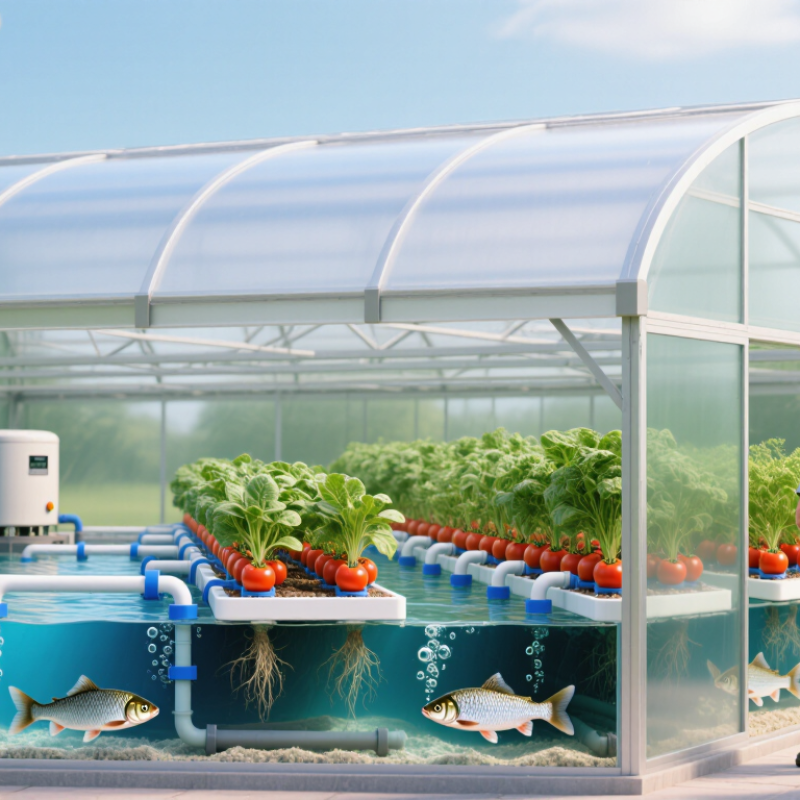
An aquaponics greenhouse combines recirculating aquaculture with soilless plant production. Fish release ammonia through waste. Beneficial bacteria convert ammonia into nitrite, then nitrate. Plants absorb nitrate through their roots. Cleaned water returns to the fish tank. The cycle is efficient, but never perfectly circular.
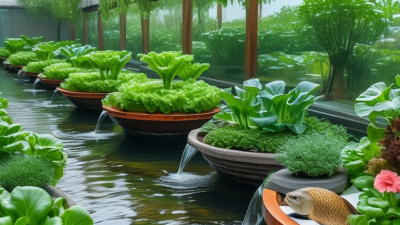
Core components include fish tanks, mechanical filters, biofilters, grow beds, water pumps, aeration units, sensors, and greenhouse controls. Media beds support plants and trap solids. Deep-water channels provide floating root zones. Nutrient film systems use shallow, flowing water. Each design needs different flow rates and maintenance routines.
The FAO report The State of World Fisheries and Aquaculture 2024 recorded 130.9 million tonnes of global aquatic animal and algae production in 2022. That scale highlights the growing need for resource-conscious production systems. A 2024 market analysis by Grand View Research projected continued expansion in the aquaponics sector, driven by controlled-environment farming and water efficiency. Report estimates differ noticeably. That difference deserves caution.
In practice, operators monitor pH, dissolved oxygen, temperature, ammonia, nitrite, and nitrate every day. Fish health can change quickly after a pump failure. Plants may show deficiency when nutrient conversion is weak. Energy use also remains a practical concern, especially for heating, lighting, and aeration. A greenhouse may save water, yet consume substantial electricity. Careful sizing, backup power, and biological patience matter more than attractive system diagrams.
Aquaponics Greenhouse Systems: Representative Operating Targets
A supplier-neutral overview of key water-quality targets used when designing and operating aquaponics greenhouse systems. Actual set points vary according to fish species, crop selection, biofilter capacity, stocking density, and local climate.
Balanced aquaponics systems typically maintain near-neutral pH, adequate dissolved oxygen for fish and nitrifying bacteria, a species-appropriate water temperature, very low ammonia and nitrite, and controlled nitrate accumulation for plant growth. The chart shows representative target values; the units are included in each category label.
Global Market Overview and Supplier Evaluation Criteria for 2026
In 2026, the aquaponics greenhouse market is becoming more regional and performance-driven. Demand is growing where water scarcity, food security, and controlled production matter. Energy prices remain a serious concern, especially in cold climates. Climate changes everything. Suppliers must design systems for local temperature, humidity, sunlight, and water quality.
A reliable supplier should demonstrate practical experience with both greenhouse production and aquatic systems. Evaluation should include structural strength, filtration capacity, oxygen management, nutrient balancing, and disease prevention procedures. Ask for operating records from comparable climates, not only attractive yield projections. Paper claims are easy. Independent testing, transparent maintenance plans, and trained service teams provide stronger evidence. Buyers should also examine sensor accuracy, data ownership, spare-part availability, and response times after installation.
Total cost matters more than the initial quotation. Review construction, electricity, feed, labor, replacement parts, and water treatment over several production cycles. Suppliers should explain applicable safety, environmental, and agricultural requirements in each target market. Financial stability is also important because a complex facility may operate for decades. However, evaluation methods are not perfect. A successful pilot in a warm region may fail during a northern winter. Some suppliers may overestimate automation benefits or underestimate staff training. A cautious buyer should request a smaller pilot, define measurable performance standards, and record unexpected losses openly before expanding.
Leading Aquaponics Greenhouse Suppliers by Region and Specialization
2026 Top Aquaponics Greenhouse Suppliers Worldwide
Leading Aquaponics Greenhouse Suppliers by Region and Specialization
European suppliers often lead in climate-controlled systems for colder regions. Their designs may include insulated panels, heat recovery, automated ventilation, and winter lighting. These features suit northern farms where frost can damage leafy crops and fish tanks. Buyers should inspect energy records, not just attractive equipment photographs.
North American suppliers commonly focus on modular commercial facilities and large-scale water management. Their systems may include solids filters, biofilters, oxygen sensors, and remote monitoring. In warmer regions, suppliers in Latin America often emphasize shade structures, rainwater collection, and low-energy cooling. Local maintenance support matters greatly. A technically advanced system can still fail when replacement parts arrive slowly.
Asia-Pacific suppliers frequently specialize in compact urban farms, educational installations, and high-density production. Suppliers serving the Middle East and Africa may prioritize dust control, solar integration, and water-efficient designs. Ask for crop yield data, fish survival records, installation timelines, and staff training details. Certifications help, but they do not replace site visits or reference checks. Some projects look efficient on paper yet consume more labor than expected. This is an important weakness to examine. Experienced suppliers should explain oxygen demand, seasonal temperature changes, disease prevention, and emergency procedures in clear language. They should also adapt tank volume, greenhouse height, filtration capacity, and local climate controls to the actual site.
Product Comparison: Greenhouse Designs, Aquaculture Units, and Growing Systems
2026 Top Aquaponics Greenhouse Suppliers Worldwide
Product Comparison: Greenhouse Designs, Aquaculture Units, and Growing Systems
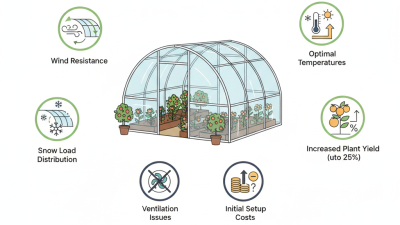
Choosing an aquaponics supplier in 2026 requires more than comparing prices. Greenhouse design must match local weather, water availability, and crop goals. Polycarbonate structures retain heat well, while screened tunnels improve airflow in warmer regions. Glass provides strong light transmission but may increase cooling costs. In windy areas, frame strength and anchoring matter more than appearance.
Aquaculture units also vary widely. Circular tanks support steady fish movement and easier waste collection. Rectangular tanks may use floor space more efficiently. Reliable systems include mechanical filtration, biofilters, oxygen monitoring, and safe drainage. Ask suppliers for water-quality records, component specifications, and maintenance instructions. Small details matter.
Growing systems deserve equal attention. Deep-water culture suits leafy greens and offers simple root access. Nutrient film systems save water but need stable pumps and clean channels. Media beds tolerate some crop diversity, although they can become heavy and difficult to clean. I have seen attractive layouts fail because access paths were too narrow. That mistake is expensive. Compare energy use, replacement parts, training, and local service before selecting a supplier. No design wins everywhere. A modest pilot system may reveal more than a polished sales demonstration. Testing one season is wise, though not always enough for long-term confidence.
Purchasing, Installation, Support, and Future Industry Trends
Choosing among 2026 aquaponics greenhouse suppliers requires more than comparing prices. Purchasing should begin with a site assessment, water testing, climate records, and crop goals. Ask for pump curves, filtration capacity, structural ratings, warranty terms, and spare-part availability. Experienced buyers also request references from farms with similar climates. A low initial quote may hide costly ventilation upgrades or weak service coverage. That is easy to miss.
Installation quality determines daily stability. Insist on commissioning records for pumps, sensors, aeration, heating, and emergency drainage. Staff should receive hands-on training, not only digital manuals. Support agreements need response times, remote diagnostics, seasonal inspections, and clear escalation contacts. Keep calibration logs and water-quality records from day one. I would still budget for small design changes after the first harvest. Real sites rarely match drawings perfectly.
Tips:
Choose suppliers offering modular expansion and open data access. Confirm software can export readings without locked subscriptions. Watch trends such as efficient LEDs, heat recovery, automated dosing, and climate prediction tools. Yet automation should not replace human observation. A cloudy sensor can mislead an entire crop cycle. Review cybersecurity, worker safety, and maintenance skills before approving advanced controls. Train operators to verify every automated alert beside the tank.