Why Smart Greenhouses Are the Future of Sustainable Agriculture?
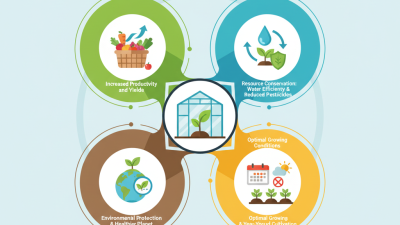
In the realm of sustainable agriculture, the concept of a "Smart Greenhouse" emerges as a transformative solution. These innovative structures leverage advanced technology to optimize growing conditions. They utilize sensors to monitor temperature, humidity, and light levels, ensuring crops receive precisely what they need. This precision maximizes yield and minimizes resource waste.
However, while Smart Greenhouses offer impressive benefits, challenges remain. Not all farmers can access the necessary technology or resources for implementation. The cost of setting up these systems can be prohibitive. There is also a knowledge gap; many traditional farmers may struggle to adapt to high-tech methods.
Despite these hurdles, the potential of Smart Greenhouses cannot be overlooked. They present an opportunity to significantly reduce the environmental impact of agriculture. By harnessing renewable energy and reducing chemical use, these greenhouses contribute to a more sustainable future. As we look ahead, embracing these innovations will be crucial for addressing global food security.
The Definition and Key Characteristics of Smart Greenhouses
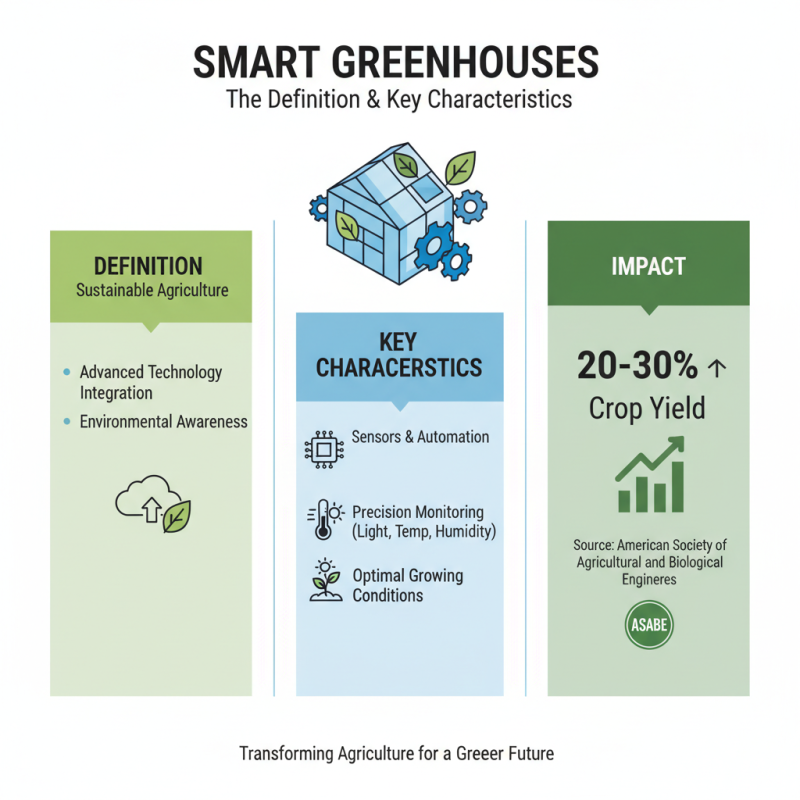
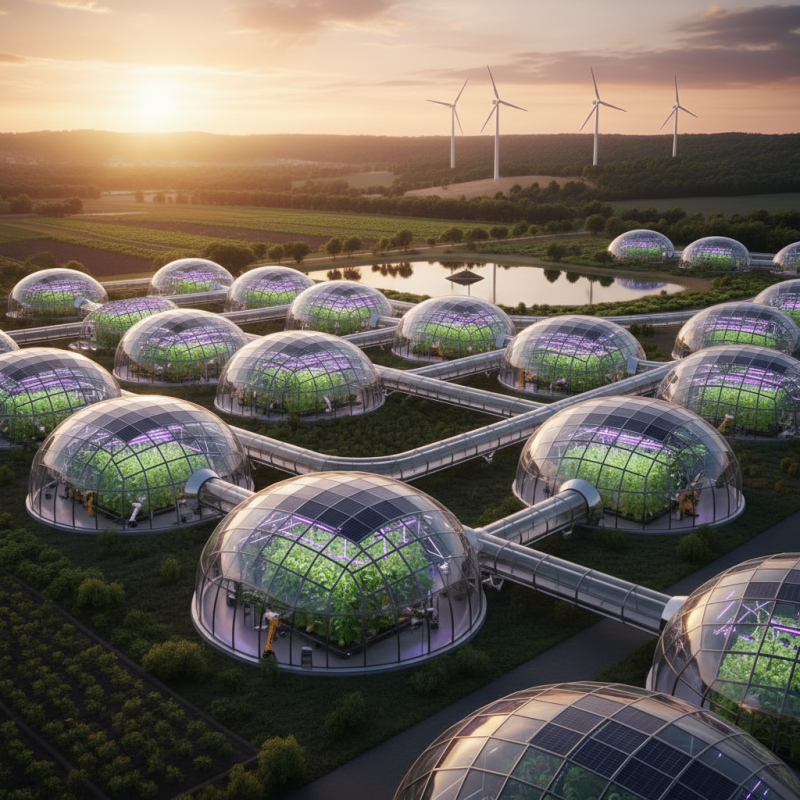
Smart greenhouses represent a transformative approach in sustainable agriculture. They integrate advanced technology with environmental mindfulness. According to the American Society of Agricultural and Biological Engineers, these structures can enhance crop yield by 20-30%. Smart greenhouses utilize sensors and automation to monitor and control light, temperature, and humidity. This precision leads to optimal growing conditions for crops.
The key characteristics of smart greenhouses include climate control systems and data analytics. These systems can adjust conditions in real time based on the plants' needs. A study from the European Commission highlighted that such systems can reduce water usage by up to 90%, promoting sustainability. Solar panels often supplement energy needs, making them more eco-friendly.
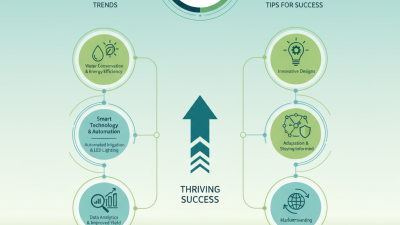
Tips: Ensure proper sensor placement for accurate readings. Regularly update software for optimal performance. Adopt a trial and error approach to find the best crop varieties for your specific greenhouse conditions. Experimentation can lead to unexpected challenges and insights.
The Role of Technology in Enhancing Crop Yields and Reducing Waste
Smart greenhouses are revolutionizing sustainable agriculture. They utilize technology to enhance crop yields and minimize waste. Precision farming techniques, such as automated irrigation and climate control, play a vital role. According to the 2023 Global Agriculture Report, smart greenhouses can increase yields by up to 30%. This increase is crucial in meeting the demands of a growing population.
The integration of sensors allows real-time monitoring. Parameters like humidity, temperature, and light can be adjusted instantly. This not only optimizes growing conditions but also reduces water usage. A recent study revealed that smart greenhouses can cut water consumption by 50%. This efficiency is essential as water scarcity becomes a pressing issue worldwide.
**Tip:** Consider using sensors to monitor environmental conditions. This investment can lead to significant improvements in crop growth.
Despite these advancements, challenges remain. The initial setup cost for smart greenhouses can be high. Additionally, farmers may need training to use these technologies effectively. As a result, not all farmers can access these benefits immediately. Addressing this gap is essential for more widespread adoption.
**Tip:** Collaborate with local agricultural extension services. They can provide valuable resources and guidance on implementing smart greenhouse technologies successfully.
Impact of Smart Greenhouses on Crop Yields and Waste Reduction
This chart illustrates the significant improvements in crop yields and reductions in food waste achieved through smart greenhouse technology compared to traditional farming methods. Smart greenhouses can yield up to 18 tons of crops per hectare while reducing food waste to only 5 percent.
Comparative Analysis: Smart Greenhouses vs. Traditional Farming Methods
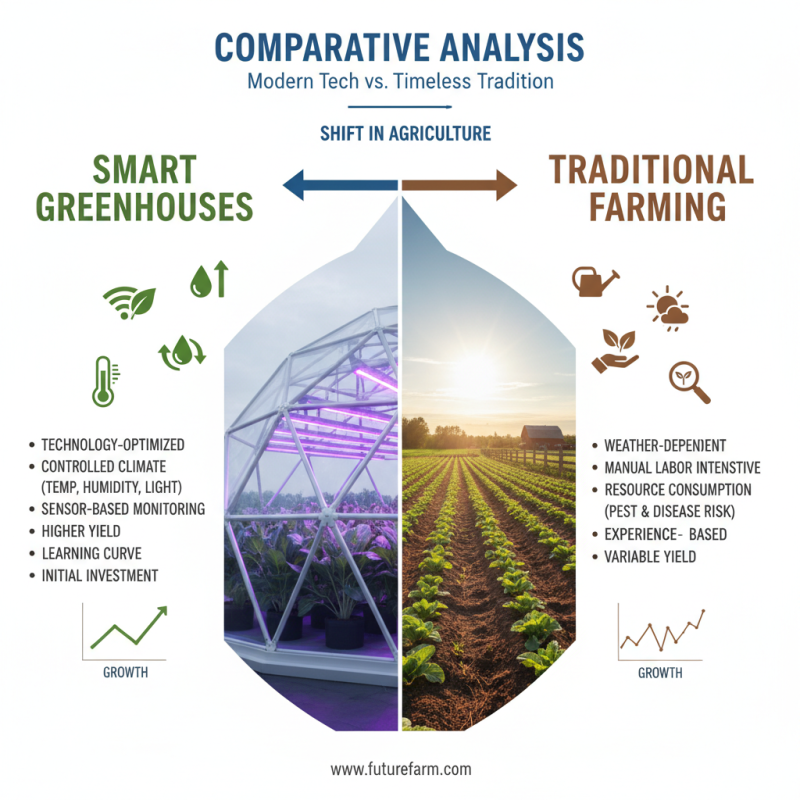
Smart greenhouses represent a significant shift in agricultural practices. They utilize technology to optimize growing conditions. By controlling temperature, humidity, and light, these systems increase efficiency compared to traditional methods. The ability to monitor crops using sensors is impressive. However, it requires a learning curve and investment.
Traditional farming relies on natural conditions. It’s simple and often less expensive. But external factors, like weather, can devastate a harvest. Pests and diseases thrive in this unpredictable environment. In contrast, smart greenhouses reduce these risks. They offer consistent yields throughout the year. Growing food in controlled settings minimizes reliance on pesticides. Nonetheless, issues can arise. Technology failures can threaten entire crops.
Environmental impact is a significant concern. Smart greenhouses can use resources more efficiently. They often recycle water and minimize waste. Still, there is a dependency on energy sources for operation. Transitioning to sustainable energy is essential but challenging. Overall, the comparison highlights a complex landscape in agriculture. Both methods have strengths and weaknesses. It’s an ongoing journey to find balance.
Economic Benefits: Cost Savings and Profitability in Smart Agriculture
Smart greenhouses represent a revolutionary shift in agricultural practices. They utilize cutting-edge technology to optimize growing conditions. According to a 2022 report by the Food and Agriculture Organization (FAO), these systems can boost crop yields by up to 30%. This improvement directly correlates with increased profitability for farmers.
Economic benefits extend beyond just higher yields. Reports indicate that operating costs decrease significantly. Smart greenhouses reduce water usage by 50% through precision irrigation techniques. Energy efficiency can save up to 40% in heating and cooling costs. However, the initial investment can be daunting. Small farmers may struggle with high upfront costs, despite long-term savings.
These advanced systems also foster a new business model. Farmers can access real-time data for better decision-making. A 2023 agricultural technology study indicated that data-driven practices improve harvest forecasting accuracy. Nonetheless, there’s a learning curve. Many producers may find integrating technology challenging. Adapting to new systems requires time and training, which can feel overwhelming.
Environmental Impact: How Smart Greenhouses Contribute to Sustainability
Smart greenhouses represent a promising solution for sustainable agriculture. They optimize plant growth while minimizing resource usage. According to a report by the Food and Agriculture Organization (FAO), agriculture accounts for about 70% of global freshwater use. Smart greenhouses can reduce water consumption by up to 50% through advanced irrigation systems. This is crucial as the world faces increasing water scarcity.
Furthermore, smart greenhouses can significantly cut greenhouse gas emissions. They use renewable energy sources, like solar and wind. A study from the International Energy Agency (IEA) shows that energy-efficient growing practices can reduce emissions by 30%-40%. However, not all systems are perfect. Issues with technology integration can arise, and initial setup costs may be high.
Soil health is also a concern. While smart greenhouses can recycle nutrients efficiently, they may lead to nutrient depletion over time if not monitored carefully. Keeping a balance is essential. Despite some challenges, the potential benefits of smart greenhouses in reducing environmental impact are substantial.